

The problem with AI devices programmed with personality is that their appealing interactive features can hide security risks and manipulation.
I told you last month about a new breed of Attachment Economy hardware devices designed for the desktop, and described the Attachment Economy idea in a previous column. I highlighted the Honor Robot Phone, Apple’s ELEGNT project, Apple’s J595 prototype, Lenovo’s AI Workmate Concept, and the OLED AI Mini PetBot as examples of the coming wave of desktop Attachment Economy gadgets.
(The “Attachment Economy” is the next phase in the extractive “Attention Economy” idea, whereby super-attention is the core element of a business model that uses AI to simulate human or animal attributes in order to get the user to feel emotional attachment to a product.)
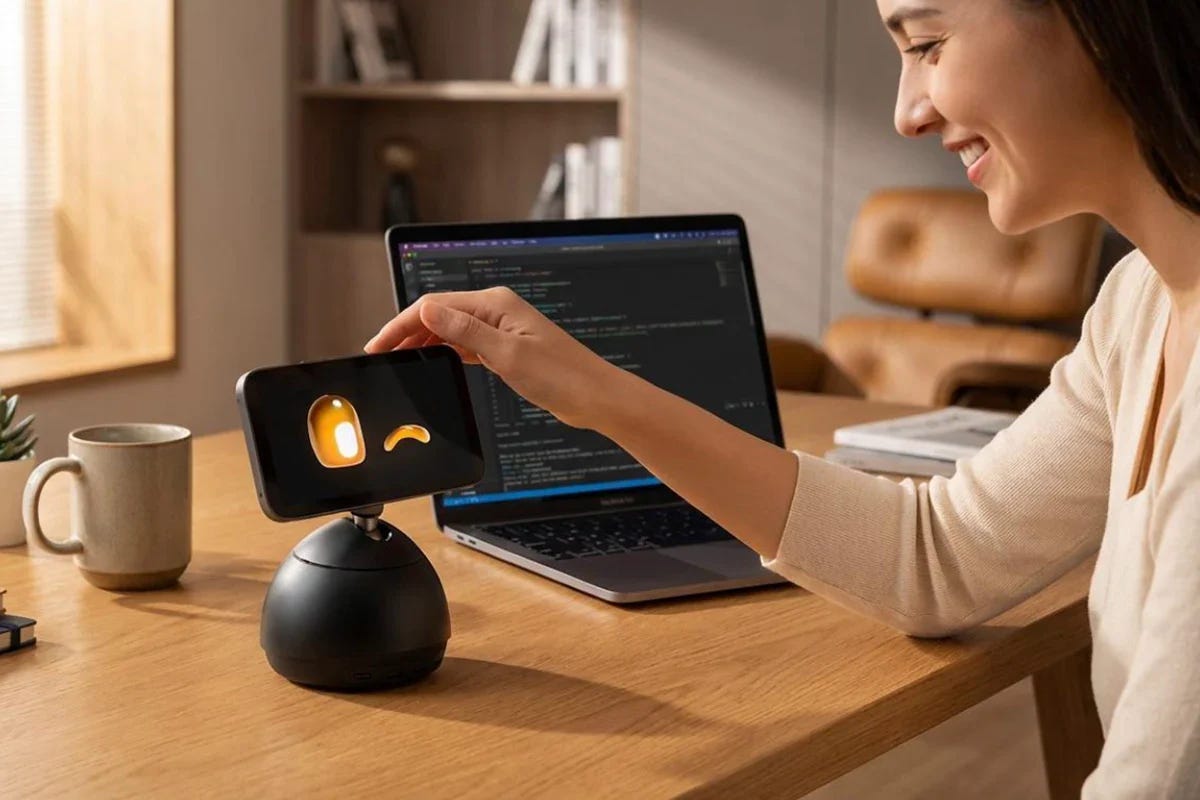
The latest desktop Attachment Economy product I know of is being Kickstarted by a two-founder startup called KEYi Tech. The product is called LOONA DeskMate, and it’s a stand or a boom that, combined with your normal phone, becomes a kind of interactive AI desktop robot.
As with a smattering of similar devices, LOONA DeskMate is programmed with a “personality” and expressive eyes, and connects you to a chatbot. The device moves the phone to simulate body language via three brushless servo motors, while the on-screen eyes blink, emote and look around in response. It faces you, listens to what you say, and decides when you’re talking to it.
The product’s Kickstarter claims that LOONA DeskMate can “trigger multi-step workflows in the background,” using Gmail, Slack, Calendar, Zoom and more than 50 other applications.
LOONA DeskMate is like a few other products and concepts, but with one massive difference. Its AI is agentic, courtesy of OpenClaw.
